Skip to content
Survepesu Tallinn logo, pressure washing and facade washing in Tallinn and Harju County
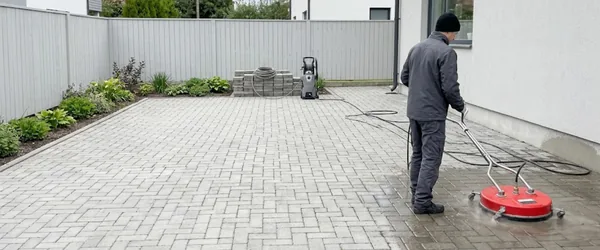
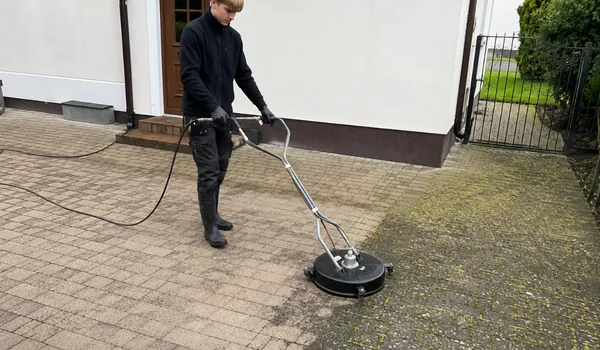
A rotary surface cleaner washes a courtyard. The slope is checked first so wastewater reaches the drain, not a neighbour’s property.

#1 pressure washing company in Tallinn

Survepesu Tallinn: paving stone cleaning

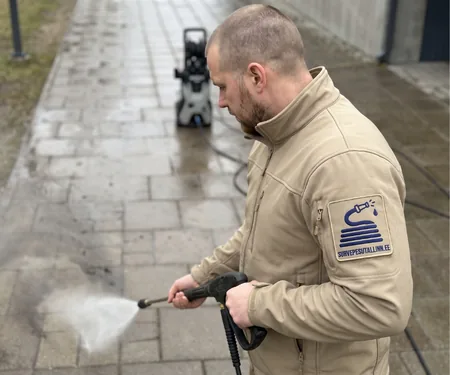
Survepesu Tallinn cleans paving stones, concrete slabs and car park asphalt across Tallinn and Harju County. On concrete blocks, we use 150 bar and a rotary nozzle, keeping the jet clear of the joints so it does not wash out the sand.

Washing can remove some joint sand, so we refill the joints afterwards. Empty joints let stones shift and give seeds room to germinate. By the end of 2025, we had cleaned 1,893 paved areas covering 223,517 m², including 171 areas in 2025.

  • Licensed and insured
  • 100% satisfaction guarantee
  • 223,517 m² of pavement washed by the end of 2025

Paving cleaning and related services

Four paving services chosen for the stone and the condition of its joints.

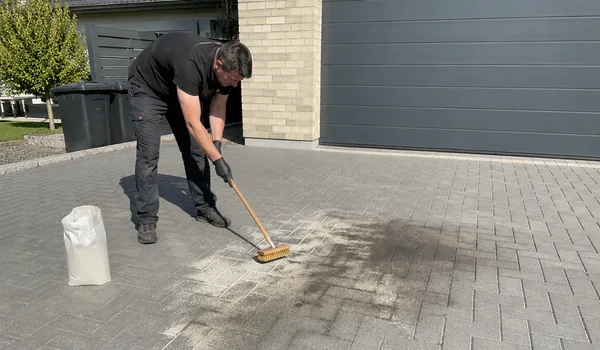
  • A technician brushes an oil stain on concrete paving. Absorbent granules can be put on a fresh spill before the team arrives.

    Oil stain removal

    For oil stains, we use 80°C water and alkaline cleaner. Older stains deep in concrete pores also need an absorbent paste, as pressure alone may leave oil behind.

    Fresh engine oil looks shiny and black; older stains dry to a dull brown. We allow different paste contact times for each. By the end of 2025, we had removed oil stains from 214 paved areas.
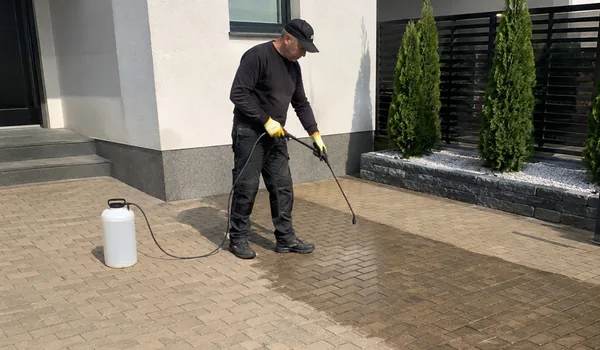
  • Sealer is sprayed onto paving stones. The treated area looks darker while wet; the water-based product does not darken dry stone.

    Paving stone sealing

    We seal clean, dry paving with a breathable product at 1 litre per 5 m². It repels water and oil while allowing moisture within the stone to evaporate.

    By the end of 2025, we had sealed 167 paved areas. We avoid film-forming coatings, which can crack and peel in freezing weather.

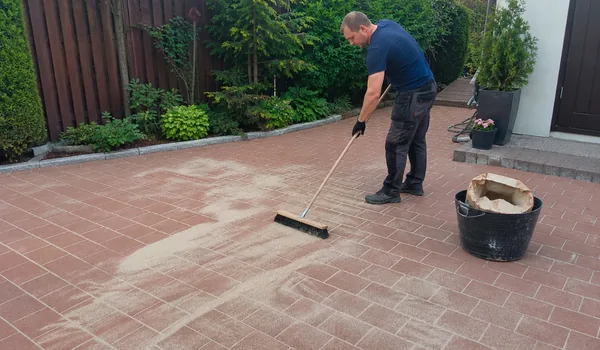
  • Dry sand is brushed diagonally into red paving joints so the brush does not pull it back out.

    Re-sanding paving joints

    After washing, we brush dry sand screened through a 2 mm sieve into the joints and compact it with a vibrating plate. Full joints help keep stones stable and leave less room for moss.

    We re-sand after every paving wash because pressure can displace old sand. By the end of 2025, we had used 11,176 bags of joint sand.

Paving stone cleaning prices

We multiply the area by the cleaning rate for its surface material. These Tallinn rates list joint re-sanding and sealing separately. The average paved area cleaned by the end of 2025 was 118.1 m², costing €425.16 including re-sanding.

ServicePrice
Paving stone cleaningfrom €2.40/m²
Moss prevention treatmentfrom €0.90/m²
Oil stain removalfrom €6/m²
Paving stone sealingfrom €3.20/m²
Re-sanding paving jointsfrom €1.20/m²
Call-out within Tallinn€25

What affects the price:

  • surface material: concrete stone withstands higher pressure and cleans faster than old limestone
  • condition of the joints: the washed joint needs to be sanded with every wash
  • number and age of oil stains: each old stain needs a separate paste treatment and contact time
  • shape of the area: under the park, pavement with trees and furniture needs more manual work
  • desire for sealing treatment: sealing treatment is added as a separate step after complete drying
  • slope in the direction of drainage: on paving without a slope, washing water remains in puddles and needs to be collected manually

How long does paving cleaning take?

Cleaning and re-sanding a typical 80 m² driveway takes 4 hours: 2 hours to wash, 1 hour to brush sand into the joints and 1 hour to compact it with a vibrating plate. An average 118.1 m² paved area takes 5 hours 54 minutes including re-sanding.

Oil stains add time. A fresh stain needs 20 minutes of paste contact time; an old stain may need two treatments with 2 hours of contact time.

We return separately to seal paving after it has been completely dry and rain-free for 24 hours, allowing the product to penetrate the stone. We reply within the same business day, and the first available paving cleaning day is within 4 business days.

We clean a test patch to set a pressure that preserves the joint sand. Wash water containing old sand and cleaning residue goes through a sediment filter into the sewer, away from storm drains.

Cones mark the work zone as a technician cleans concrete paving in a car park.
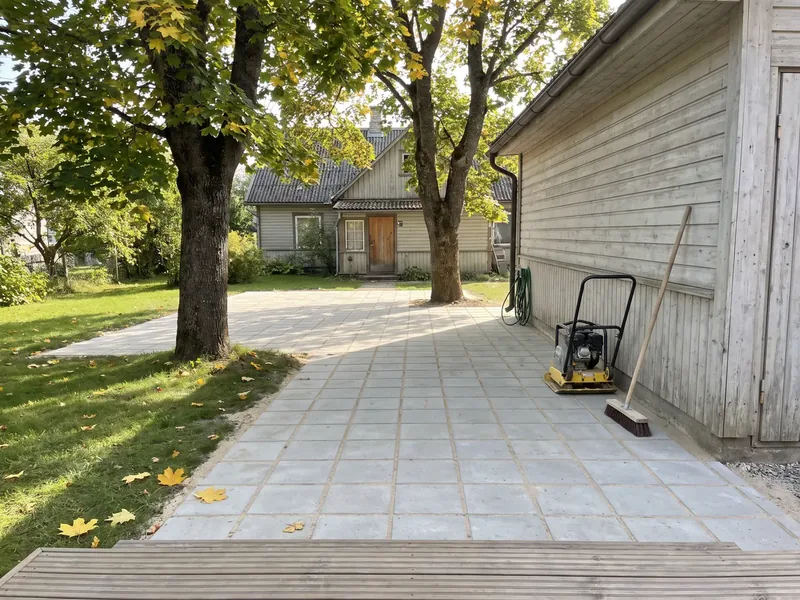
A clean concrete courtyard beneath old maples, with a brush and vibrating plate. A paving mat protects the stone from scratches during compaction.

Stone courtyard cleaning, re-sanding and sealing near Keila Church

Customer: Ülle J., owner of a property with old maples. Work site: near Keila Church, Keila. Job number: 9205.

Inspection: We removed fallen maple leaves before washing; wet leaves can stain concrete with tannin. A test patch established a 150 bar limit. Cleaning: We cleaned 120 m² with a rotary nozzle kept clear of joints. Re-sanding: We refilled the joints with dry sand screened through a 2 mm sieve and compacted it. Sealing: After 24 rain-free hours, we returned to apply 24 litres of breathable sealer to the dry stone.

Price: Paving cleaning, 120 m² × €2.40 = €288.00; joint re-sanding, 120 m² × €1.20 = €144.00; sealing, 120 m² × €3.20 = €384.00; base fees for 2 visits × €25 = €50.00; distance charges, 2 visits × 26 km × €1.20 = €62.40. Total: €928.40 including VAT.

Duration: Two visits in 2024. The first took 6 hours: 3 hours to wash and 1 hour 30 minutes each to brush in and compact sand. After 24 rain-free hours, sealing took 2 hours 40 minutes on the second visit.

Result: Rainwater beaded on the sealed stone, with no brown leaf-tannin stains remaining on the 120 m² courtyard.

Our Work Process

We clean the paving, treat stains and refill joints in one visit.

  1. 1. Inspect the paving and clean a test patch

    We inspect the material, joints and oil stains, then clean a test patch to set the pressure and nozzle distance.

  2. 2. Clean the paving and remove stains

    We clean the surface with a rotary nozzle while keeping clear of joints. Oil stains receive paste treatment; mossy areas receive biocide before rinsing.

  3. 3. Re-sand joints and hand over

    We brush dry sand into the joints and compact it with a vibrating plate. The customer receives before-and-after photos. Sealing, if ordered, is booked after the stone has dried.

How to Choose a Pavement Maintenance Method

The paving material and dirt determine whether cleaning alone is enough or paste, biocide and sealing are needed.

Concrete blocks and paving stones

Dense, factory-made concrete blocks can take 150 bar. We lower the pressure near joints to keep sand in place and the stones stable.

Old limestone and clay pavers

Old limestone paving is softer than concrete. We use lower pressure and give biocide longer to work rather than risking surface damage with a stronger jet.

Oil and grease stains

Fresh oil may come off with hot water and alkali. Older oil deep in the stone needs absorbent paste to draw it out rather than pressure that could push it further in.

Frequently Asked Questions

Why does joint sand come out during cleaning?

A nozzle held too close to a joint can lift loose sand. We keep the jet clear of joints and refill them with fresh sand after washing.

How often should paving joints be re-sanded?

After each pressure wash, as some sand can be displaced. Unwashed paving needs new sand only where heavy rainwater flow has emptied joints.

Does sealing make paving slippery?

Our breathable sealer soaks into the stone without leaving a slippery film. We do not use film-forming coatings that sit on top of the paving.

Where does paving wash water go?

Water carrying joint sand and cleaning residue passes through a sediment filter into the sewer, away from storm drains. We remove the filter after work.

Can every old oil stain be removed?

No. A stain baked deep into stone over years may leave a faint mark even after repeated paste treatment. Newer stains are easier to draw out.

What does an 80 m² driveway cost to clean?

At €2.40/m², cleaning an 80 m² driveway starts at €192, plus a €25 Tallinn call-out. Re-sanding the same area adds €1.20/m².

Do you clean apartment association car parks and driveways?

Yes. Our preventive schedule can cover paving, facade and roof in one visit. The association’s invoice lists the area of each cleaned surface and has a 14-day payment term.

Where do you offer paving cleaning?

We clean paving across Tallinn, including apartment car parks and driveways in Nõmme and Pirita, and in Saue, Viimsi, Keila, Maardu and Rae Parish. Outside Tallinn, the call-out is €25 plus €1.20/km from Haabersti.

Ask for a Pavement Washing Quote

Use the form below or call +372 XXXX XXXX. Tell us the paving material and area so we can include any joint re-sanding in the quote.

Call our Haabersti base +372 XXXX XXXX
  • Licensed and insured
  • 100% satisfaction guarantee

We need a name and a phone number or e-mail address.

Call our Haabersti base +372 XXXX XXXX